The case
Every OS you can buy is shaped by its vendor. This one is shaped by your solution.
Where this came from, what it is not, and what is wrong with all three of the systems you could run instead.
Where this came from
Where an imported system is a liability, not a help.
This work did not begin at the operating system. It began with real solutions — for shops, clinics, banks, public services — being built for the African context: intermittent power, connectivity that comes and goes, budgets that rule out costly licences and disposable hardware, and data whose sovereignty is not up for negotiation.
In that context an imported ecosystem is a liability, not a help: a cloud you cannot reach when the link drops, support that ends on a foreign calendar, hardware you cannot replace from the shop down the road, and terms you cannot audit — in a language of dependencies you did not choose.
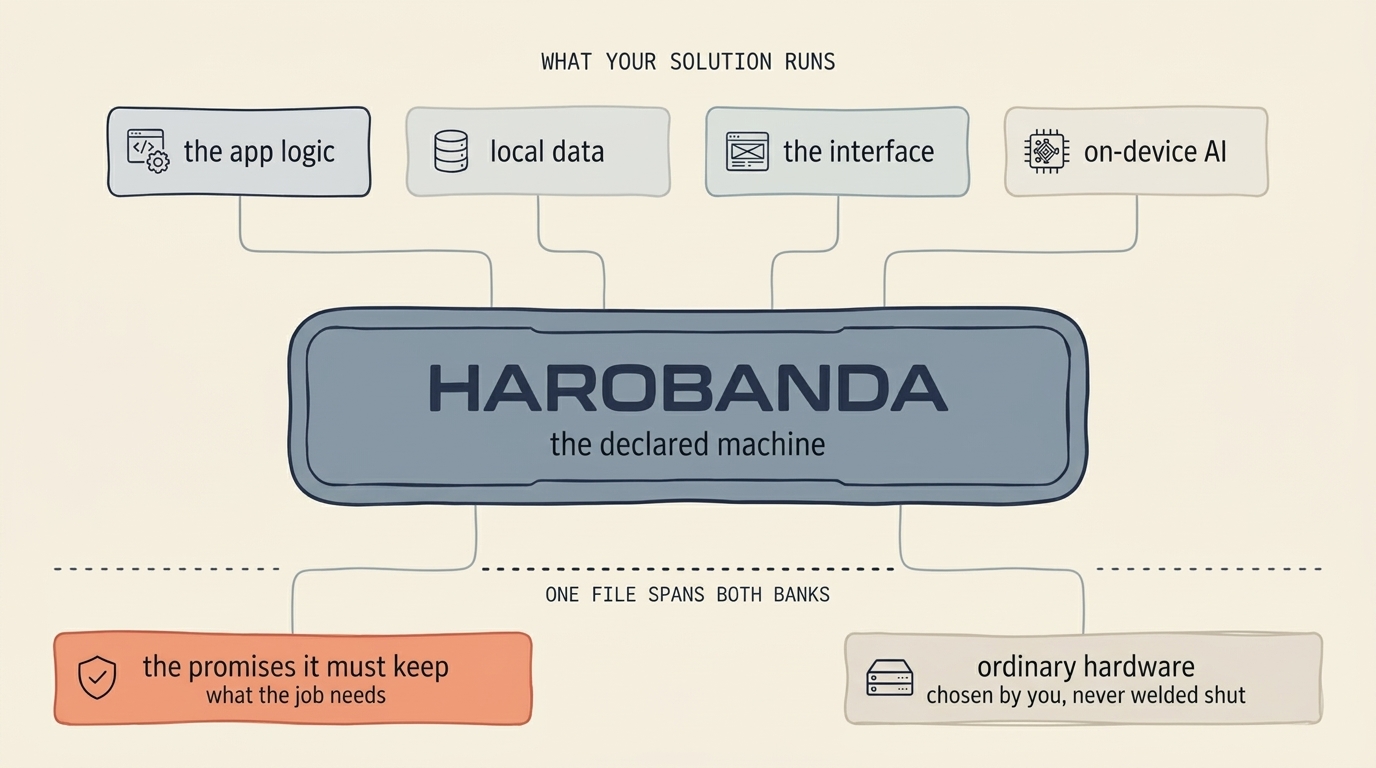
What these solutions actually needed was the opposite: a box that survives the cut, a name that never moves, records that never leave the room. And those guarantees turned out to live one floor below the application — in the machine itself. So that is where the work went.
Where this sits
It resembles several things you already run.
Nothing below is wrong, and you probably use some of it every day. The point of this section is narrower than that: to stop you reading the next five pages as a weaker version of something you have already made up your mind about.
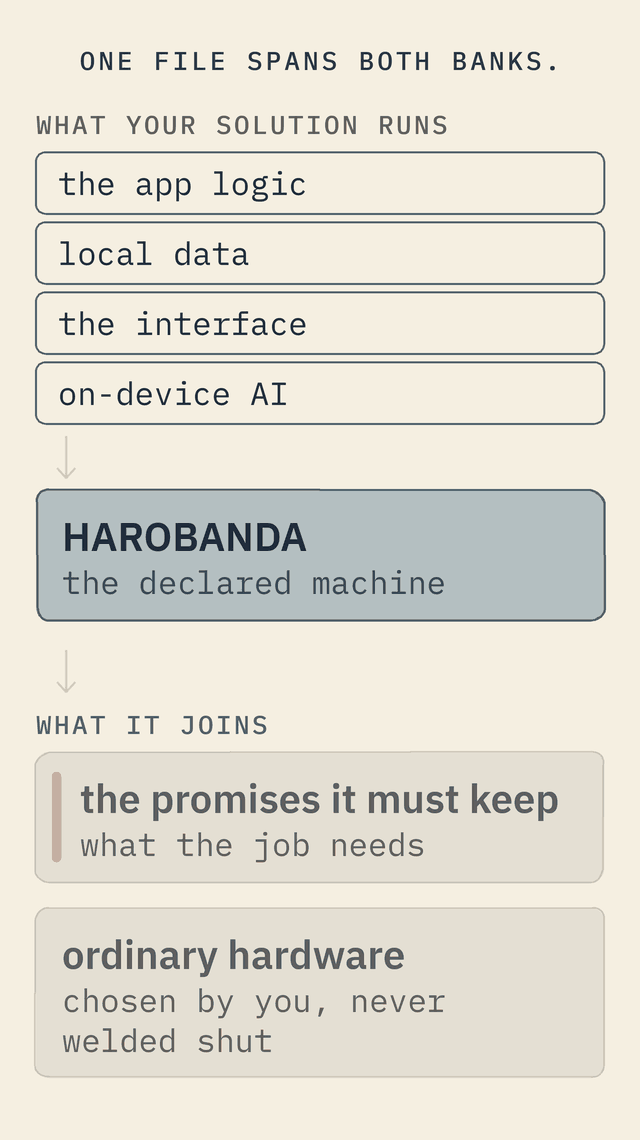
Each of those says what to put on a machine. A declaration says what the machine is — and it is still there at boot, to be judged against.